


Technology
You Didn’t Get Breached. Your Vendor Did. Your Customers Won’t Care About the Difference.
Technology companies sell trust as much as they sell software, and that trust is now the thing attackers target hardest. The cost of a data breach in the tech sector averages $5.50 million, but the real story is how breaches happen. Third-party involvement has jumped to 30% of all incidents, doubling in a single year, largely because a compromise anywhere in a SaaS platform, an open-source dependency, or a managed service provider cascades straight through to every downstream customer. Supply chain breaches now take an average of 258 days to identify and contain, and they cost more too. That’s because by the time anyone notices, the compromise has usually already reached other organizations’ data. If you’re a technology company, your security posture isn’t just your own risk anymore, but also your customers’.
Fast-moving development environments create opportunities for small oversights to become major security issues. We commonly assess:
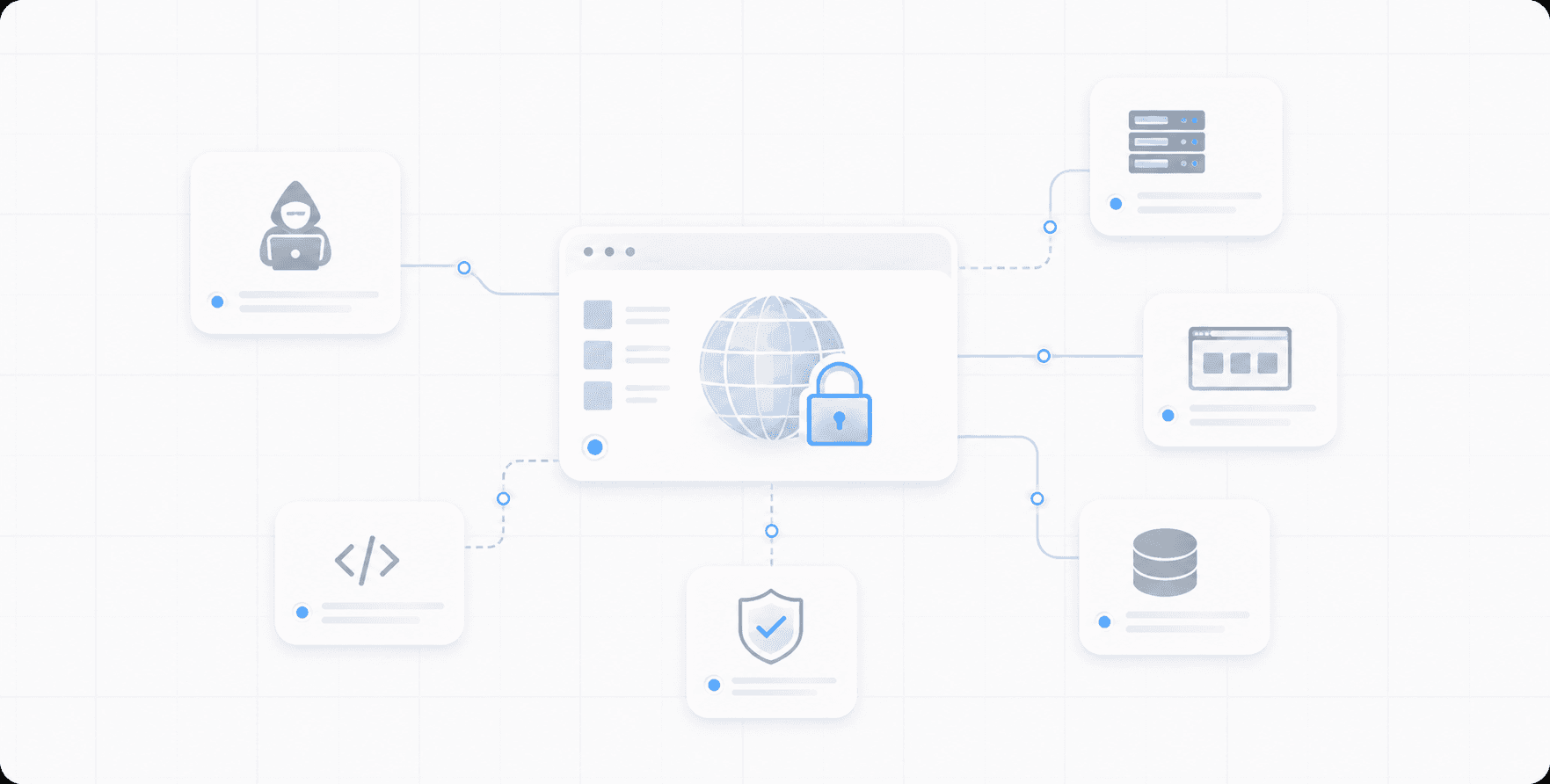
Our software penetration testing assesses your applications and APIs for the vulnerability classes that matter most in modern SaaS. This includes authentication bypass, tenant isolation failures, business logic flaws, and injection vulnerabilities, along with cloud infrastructure testing of your identity, storage, and network configurations.
For those of you who rely on open-source dependencies or third-party integrations, we see what access those dependencies have within your environment, because a compromised package rarely stays contained to the package itself. For companies with a customer-facing security posture to prove (SOC 2, ISO 27001), we test whether that posture holds up against real-world attack techniques.
Winning enterprise business increasingly depends on proving your security posture. Buyers may expect SOC 2 Type II, global buyers often look for ISO 27001, and privacy laws like GDPR or CCPA come into play depending on whose data you process. We align every finding with the frameworks your customers and contracts require, giving you a report that serves two purposes. First, it strengthens your security posture, and second, it supports security reviews during the sales process.


Every release introduces something new. Make sure it isn’t a vulnerability.
FAQs
We already have SOC 2. Why do we need a pentest too?
Our system combines speed, flexibility, and powerful automation tools into one seamless workflow designed for modern teams.
How does this help with sales and security reviews, not just compliance?
Our system combines speed, flexibility, and powerful automation tools into one seamless workflow designed for modern teams.
Do you test our third-party integrations and dependencies?
Our system combines speed, flexibility, and powerful automation tools into one seamless workflow designed for modern teams.